Comprehensive Ventilation
+ Cooling Solutions

HVAC Solutions:
Expert Cooling, Ventilation, and Smoke Extraction

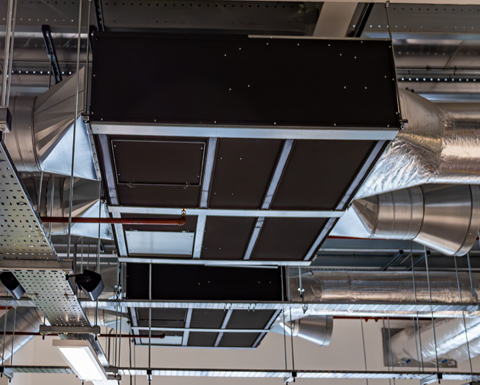
Effective cooling, ventilation and smoke clearance systems are essential for maintaining indoor air quality, occupant safety and operational performance across commercial and public sector buildings.

From offices and healthcare environments to large industrial spaces, systems must manage heat loads, control airflow and meet strict energy and fire safety regulations.

Modern strategies combine technologies such as MVHR, evaporative cooling, chiller systems and compliant smoke ventilation to deliver efficient, integrated building performance. For facilities managers, a well-planned approach ensures comfort, safety, regulatory compliance and long-term cost efficiency.
Ventilation

HVAC Solutions:
Expert Cooling, Ventilation, and Smoke Extraction

Our ventilation, cooling, and smoke extraction systems are designed to enhance indoor air quality, comfort, and safety in commercial and industrial buildings in Leeds, Sheffield, Manchester and across the UK.

Whether you need efficient air circulation, temperature control, or a reliable smoke removal system in case of emergencies, our tailored solutions meet the specific needs of your space.

Our dedicated preventative maintenance schedules will keep your ventilation and cooling systems operating, avoiding unexpected downtime, and our 24/7 repair service will promptly address any issues.

Ventilation

VENTILATION + COOLING SOLUTIONS

MVHR Systems

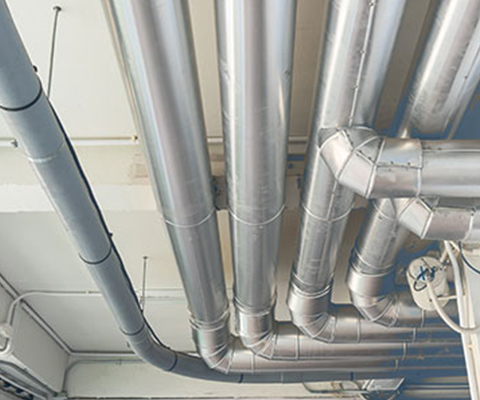
Mechanical Ventilation with Heat Recovery (MVHR) systems provide controlled, energy-efficient ventilation by extracting stale air and recovering its heat to pre-warm incoming fresh air via a heat exchanger. Widely used in airtight commercial and public sector buildings, MVHR maintains consistent indoor air quality by reducing CO₂ levels, pollutants and excess humidity while delivering balanced airflow throughout the space.

By lowering heating demand and improving overall system efficiency, MVHR supports reduced energy consumption, enhanced occupant comfort and compliance with current building regulations and ventilation standards.

How much energy can MVHR save?

Energy savings depend on building airtightness and operating hours. In well-sealed buildings, MVHR can significantly reduce heating demand by recovering waste heat from exhaust air, lowering overall HVAC energy consumption and improving EPC ratings.

Evaporative Cooling

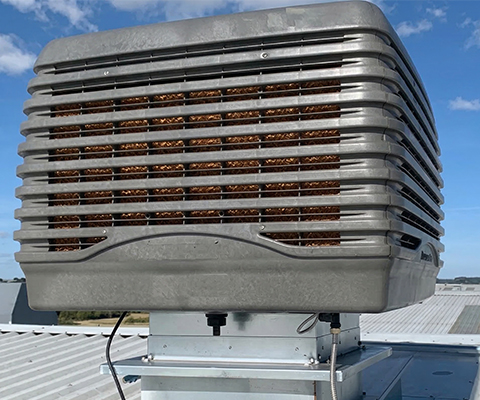
Evaporative cooling systems provide energy-efficient temperature control by using the natural process of water evaporation to cool incoming air. Warm external air passes through water-saturated media, reducing its temperature before being introduced into the space. This approach is particularly effective in large, open-plan environments with high air volumes.

Commonly used in warehouses, manufacturing facilities and industrial settings, evaporative cooling delivers a constant supply of fresh air while helping to manage heat build-up and improve occupant comfort. With low electrical demand and simple system design, it offers a cost-effective and sustainable cooling solution for suitable applications.

Where is evaporative cooling most effective?

Evaporative cooling is most effective in large, open-plan environments such as warehouses, manufacturing facilities, logistics hubs and workshops. It is especially suited to spaces with high heat gains or frequent air changes.

Chiller Systems

Chiller systems provide reliable, large-scale cooling by removing heat from water and distributing chilled water through air handling units (AHUs) or fan coil units (FCUs). Using vapour compression or absorption cycles, chillers deliver consistent and controllable cooling across a wide range of commercial and public sector environments.

Commonly used in offices, healthcare facilities and complex buildings, chiller systems support precise temperature control, high cooling loads and continuous operation. 

How can facilities managers improve chiller efficiency?

Efficiency can be improved through a combination of optimisation and maintenance. This includes refining controlss and sequencing to match demand, maintaining correct refrigerant charge, and using variable speed drives (VSDs) to reduce part-load energy use. 

Smoke Clearance Systems

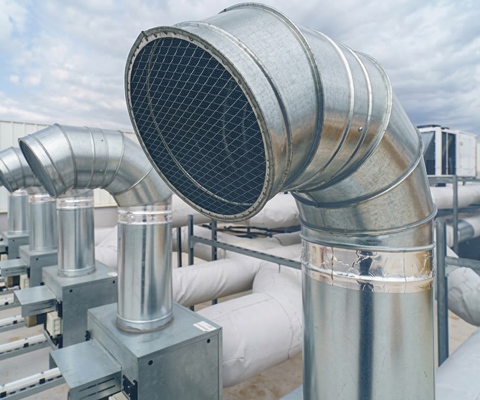
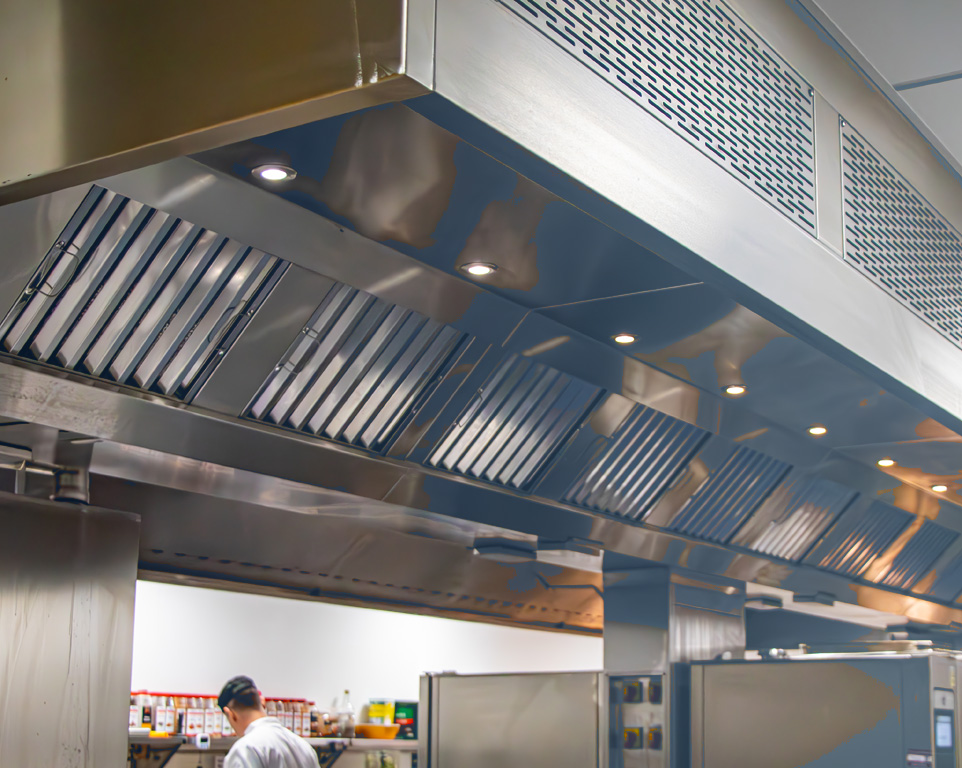
Smoke clearance systems are life-safety ventilation systems designed to remove smoke from buildings during a fire event, protecting escape routes and supporting firefighting operations. They work by extracting smoke or introducing fresh air to maintain clear, breathable conditions in key areas such as stairwells, corridors and atria.

Commonly required in commercial, multi-storey and high-occupancy buildings, these systems must comply with Approved Document B and relevant BS EN standards. When properly designed, tested and maintained, smoke clearance systems play a critical role in ensuring occupant safety, regulatory compliance and emergency system reliability.

Are smoke ventilation systems legally required?

Yes, in many commercial, high-rise and multi-occupancy buildings. Requirements are set out in Approved Document B, alongside BS EN standards such as BS EN 12101. These systems are critical for maintaining safe escape routes and supporting firefighting operations.

Looking for a ventilation or cooling solution?

Talk to our HVAC Engineers

Our team of ventilation and cooling specialists will work with you to find the perfect solution for your commercial or industrial space.

Image
CASE STUDY

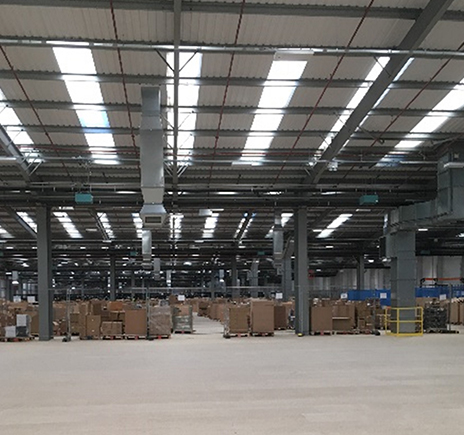
Evaporative Cooling System for a Distribution Centre

We provided an evaporative cooling solution for a large, open warehouse, utilising roof-mounted evaporative cooling units and extract fans. The system was integrated with the BMS system to provide energy-efficient spot cooling where needed within the space.

Our Projects

Recent Ventilation + Cooling Projects

Image
Our Testimonial

What Our Clients Say