- 01535 652338
- mail@watsonsbs.com


Blog
Air Conditioning: What Maintenance in Spring Actually Achieves
WBS
General
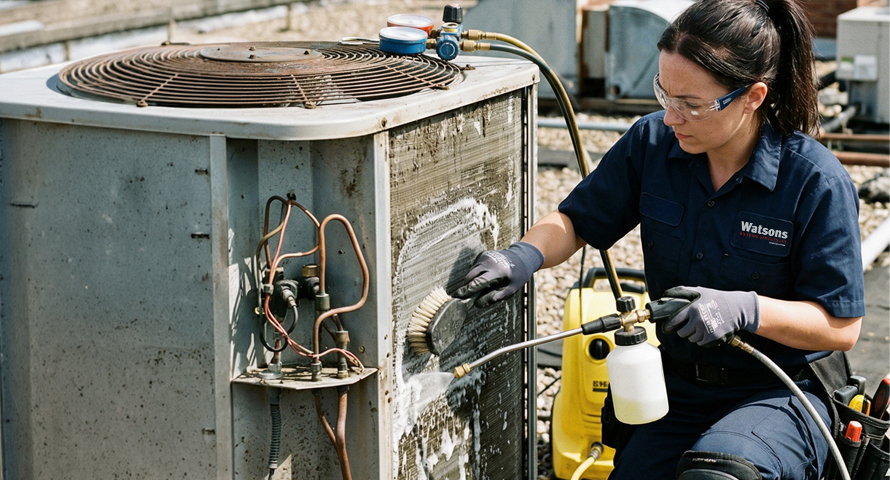
Air conditioning maintenance is often seen as routine, but its impact is far more significant. For facilities managers and building owners, maintenance during Spring is one of the most effective ways to restore system performance, reduce energy consumption and avoid costly failures during peak summer demand.
Over time, even well-designed systems drift away from their original operating efficiency. Dirty coils, blocked filters, and poorly maintained plantrooms gradually increase energy use while reducing cooling output. These issues rarely trigger immediate faults, but they quietly affect performance, cost and reliability.
Understanding what maintenance actually achieves, and where the biggest gains come from, helps shift it from a compliance task to a strategic part of building performance management.
Restoring Heat Transfer: Dirty vs Cleaned Coils
Air conditioning systems rely on clean heat exchange surfaces to operate effectively. As coils become coated with dust and debris, their ability to transfer heat reduces, forcing the system to work harder and run longer to achieve the same cooling output.
This decline is gradual but measurable. Systems with clean coils typically operate close to full design efficiency, while moderately dirty coils can reduce this to around 85%. In more severe cases, efficiency can fall to 70% or lower. The impact is not just reduced cooling performance, but also increased energy consumption and unnecessary strain on compressors.
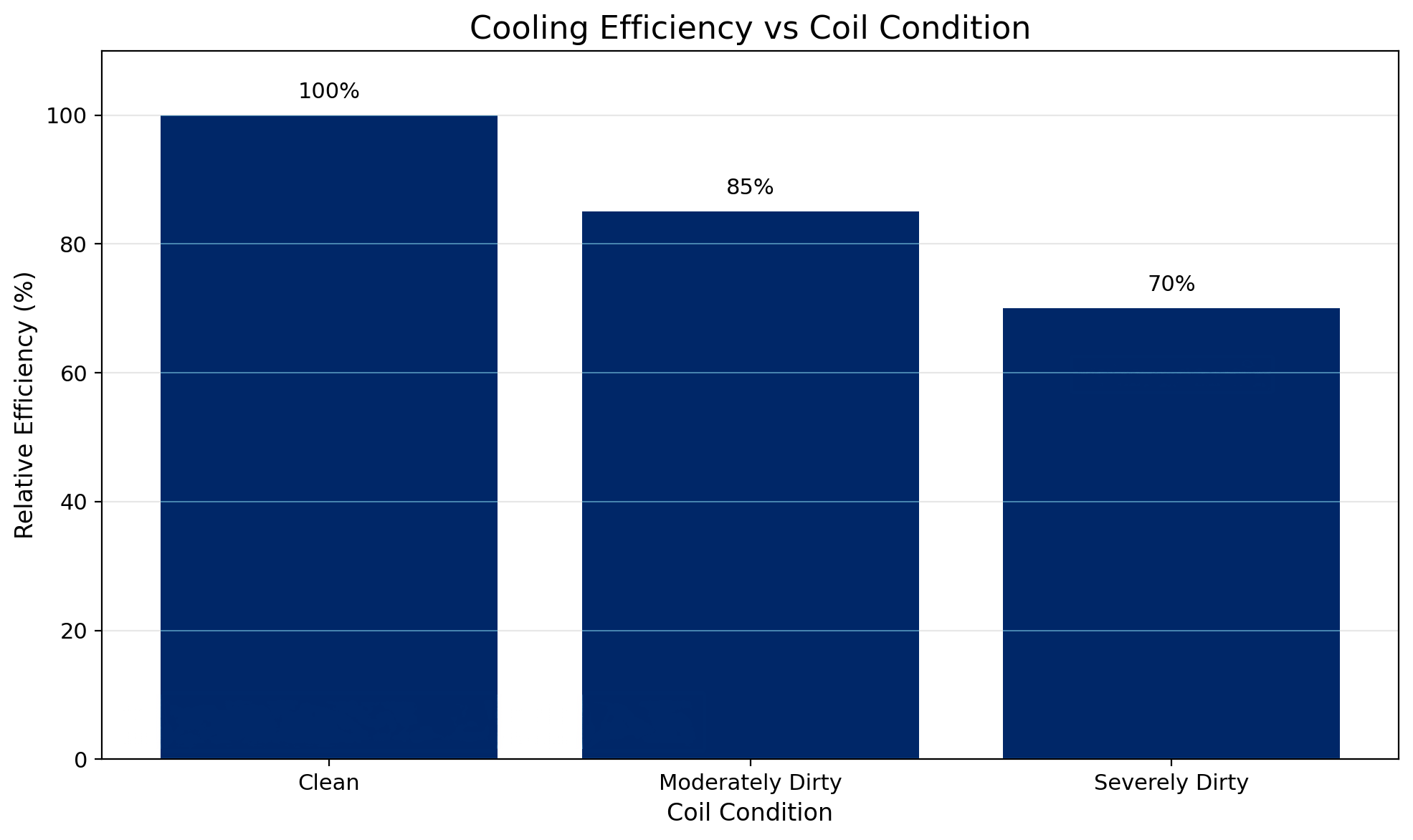
Once coils are professionally cleaned, heat transfer is restored almost immediately. Systems stabilise, pressures reduce, and performance returns much closer to intended levels. Targeted cleaning and diagnostic checks are often one of the fastest ways to recover lost efficiency in an underperforming system.
Airflow and Energy Use: Blocked vs New Filters
Filters play a critical role in maintaining airflow and system balance, yet they are one of the most common causes of inefficiency. As filters become blocked, airflow is restricted, forcing fans and compressors to compensate by running longer and harder.
The relationship between filter condition and airflow is direct. Clean filters allow full airflow, but partial blockage can reduce this to around 80%, while heavily clogged filters can drop airflow to 60% or less. This reduction not only impacts comfort levels but also increases energy use and accelerates wear on system components.
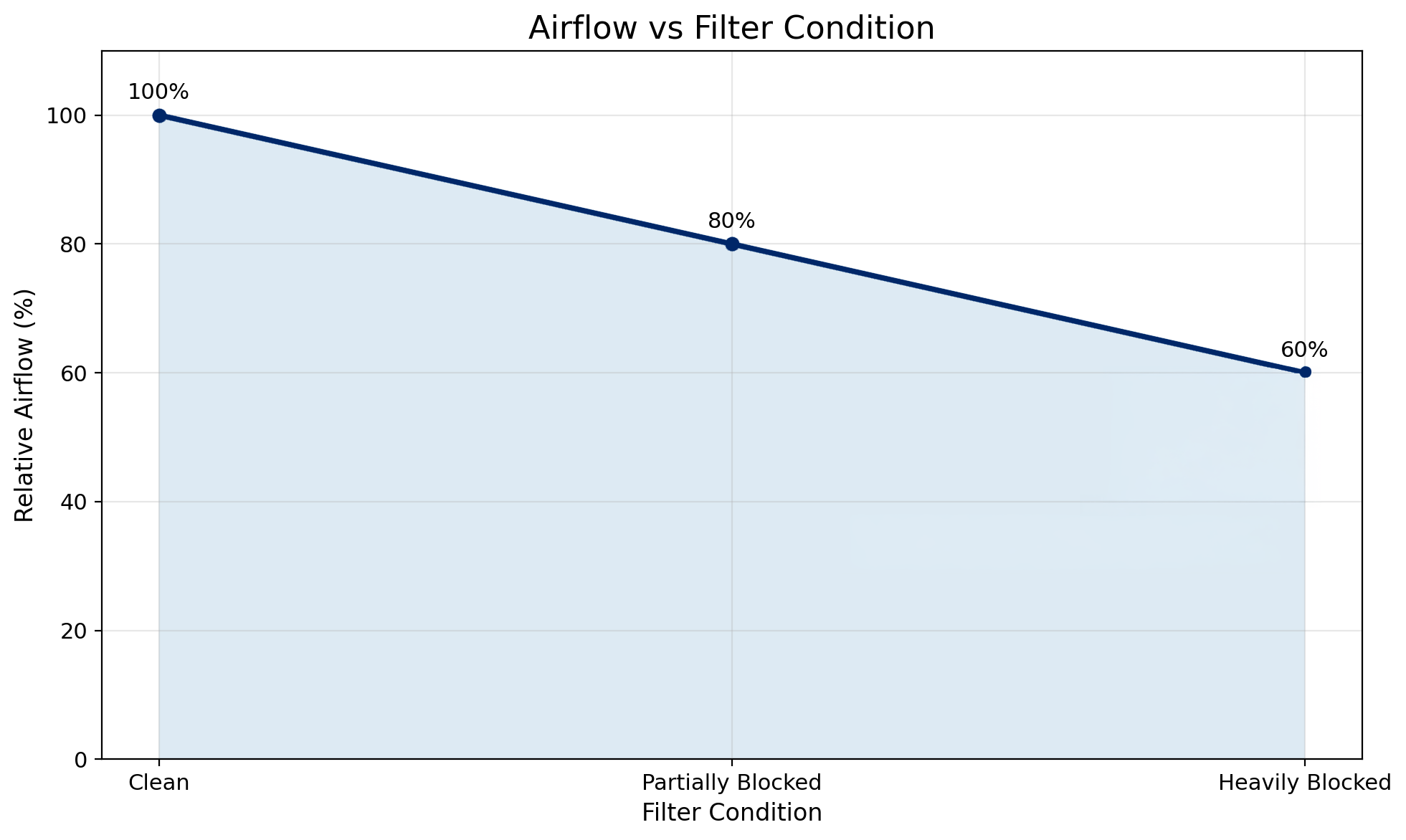
Replacing filters restores airflow immediately, allowing the system to operate as designed. It also improves indoor air quality and helps maintain consistent temperature control across the building. Ensuring the correct filter type and replacement schedule is part of a broader, proactive maintenance strategy.
The Overlooked Factor: Plantroom Condition
While coils and filters are often prioritised, the condition of the plantroom itself plays a critical supporting role in system performance. Poorly organised or neglected plant spaces can restrict airflow around equipment, contribute to overheating and make routine maintenance more difficult.
When plantrooms are cleaned and properly organised, the benefits extend beyond appearance. Maintenance tasks can typically be completed more efficiently, often reducing service time by up to 20%, while improved access allows engineers to identify issues earlier. Better airflow around equipment also supports more stable operating conditions and reduces the likelihood of overheating.
A structured approach to plantroom management, combined with regular servicing, helps ensure systems remain accessible, compliant and operating under the right conditions throughout the year.
Combined Impact on System Performance
When these maintenance actions are carried out together, their impact is cumulative rather than isolated. Improvements in heat transfer, airflow and operating conditions combine to produce a noticeable uplift in overall system performance.
Post-maintenance data typically shows increases in cooling output alongside reductions in system runtime and fault frequency. In many cases, systems that have been underperforming can recover up to 90-95% of their original design capability. This not only improves occupant comfort but also reduces mechanical strain on key components.
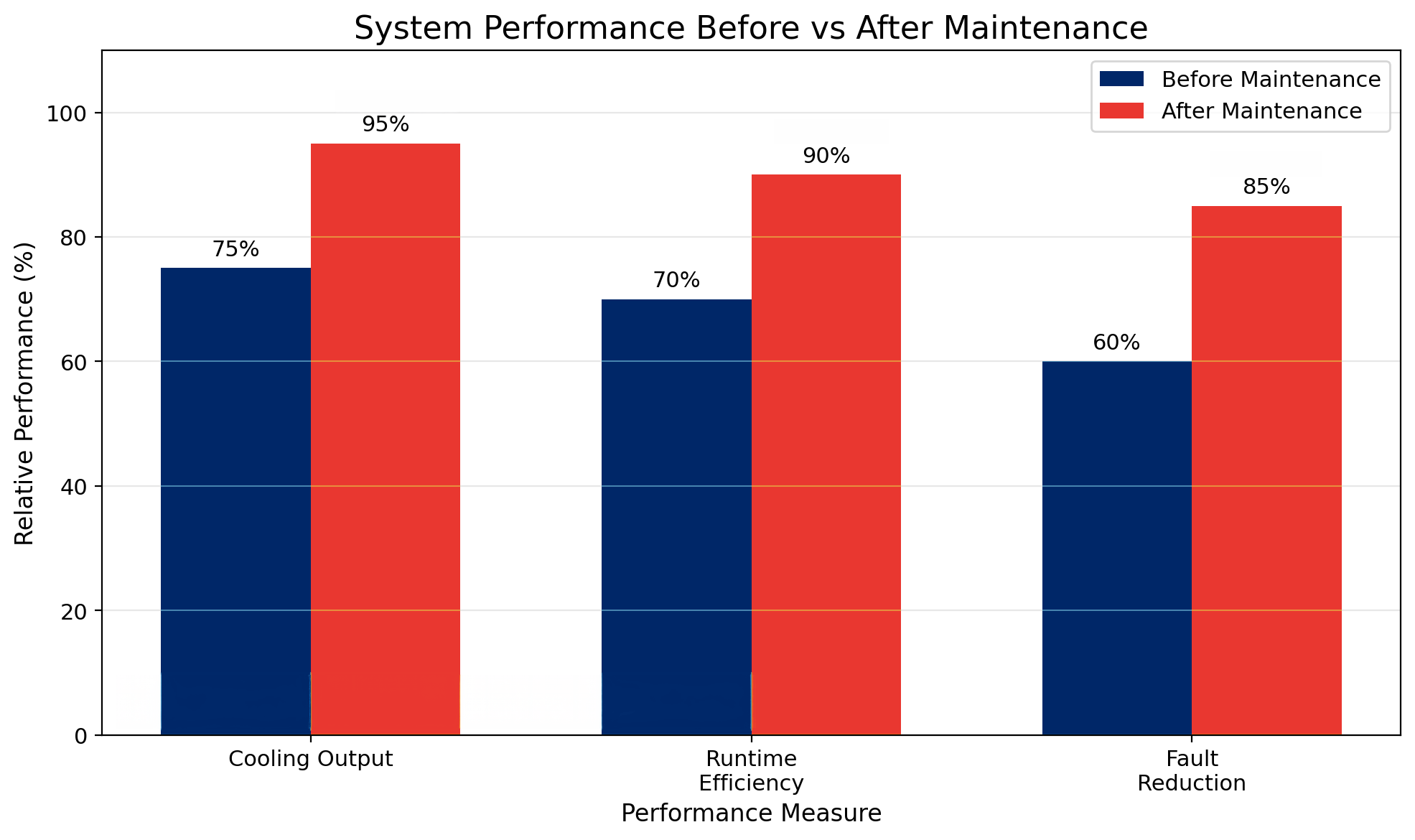
A coordinated approach, covering inspection, cleaning and system optimisation, ensures these improvements are sustained, particularly as systems move into periods of high demand.
Energy and Cost Implications
The energy and cost implications of maintenance are closely tied to these performance improvements. Systems operating without regular servicing tend to consume more energy as inefficiencies build, leading to higher running costs and increased reactive maintenance.
A clear pattern emerges when comparing energy use across different maintenance levels. Poorly maintained systems operate at the highest energy levels, while partial maintenance delivers moderate improvements. Fully maintained systems, however, can reduce energy consumption by 10-25%, depending on their condition prior to servicing.
For facilities managers, this translates into more predictable energy usage, improved cost control and better alignment with sustainability targets. It also extends the operational life of equipment, reducing the need for premature replacement.
Innovation, Expertise, Excellence: The Trusted Air Conditioning Experts
Spring air conditioning maintenance delivers measurable improvements across performance, energy efficiency and cost control. For facilities managers and building owners, the value lies not just in preventing faults, but in maintaining consistent, predictable building performance over time.
With a long track record in maintaining and optimising building services systems, Watsons Building Services supports clients in keeping their air conditioning operating as it should: efficiently, reliably and ready for seasonal demand.
Is your AC system ready for the Summer?
If you’re preparing your systems for summer, a structured maintenance approach during Spring can make a measurable difference. Connect with Watsons Building Services for expert air conditioning servicing and upgrade solutions.
Frequently Asked Questions
Air conditioning maintenance restores system efficiency by improving heat transfer, airflow and overall operating conditions. This results in better cooling performance, lower energy consumption and reduced strain on key components.